
ADHD and Amphetamines
ADHD and Amphetamines
Author: Mark Parkinson BsPharm: President AFC-CE
Credit Hours 2 - Approximate time required: 120 min.
Educational Goal
Explain what ADHD is and how amphetamines are used in its treatment.
Educational Objectives
- Tell what AHDH is and the stereotypes that have built up over time.
- Teach about the pathophysiology of ADHD.
- Explain what Executive function is and how it is related to ADHD.
- Explain how ADHD is Diagnosed.
- Discuss how ADHD is treated
- Discuss how amphetamines and other stimulants are used in ADHD treatments.
Procedure:
Read the course materials. 2. Click on exam portal [Take Exam]. 3. If you have not done so yet fill in Register form (username must be the name you want on your CE certificate). 4. Log in 5. Take exam. 6. Click on [Show Results] when done and follow the instructions that appear. 7. A score of 70% or better is considered passing and a Certificate of Completion will be generated for your records.
Disclaimer
The information presented in this activity is not meant to serve as a guideline for patient management. All procedures, medications, or other courses of diagnosis or treatment discussed or suggested in this article should not be used by care providers without evaluation of their patients’ Doctor. Some conditions and possible contraindications may be of concern. All applicable manufacturers’ product information should be reviewed before use. The author and publisher of this continuing education program have made all reasonable efforts to ensure that all information contained herein is accurate in accordance with the latest available scientific knowledge at the time of acceptance for publication. Nutritional products discussed are not intended for the diagnosis, treatment, cure, or prevention of any disease.
ADHD and Amphetamines
This CE is a request from a subscriber. Yes, we do those.
ADHD is a murky topic that everyone has heard about but generally few have a good comprehension of what it is. Because of this, myths and misunderstandings have grown around the subject. The term ADHD has been misused so often that a hazy stereotype has built up around it in our culture. I am going to do my best to demystify your understanding of it in this lesson.
What is ADHD
ADHD stands for Attention Deficit Hyperactivity Disorder. It is a spectrum of neurodevelopmental disorders. In my opinion, disorder may be too strong a word; it's more like a condition than a disorder. What that means in everyday language is that parts of the brain are formed differently at birth from those of other people. The result is that those who are on this spectrum think, act, and react differently from social norms to varying degrees. Those who have it are unusual because their brains are just wired differently.
What Happens in ADHD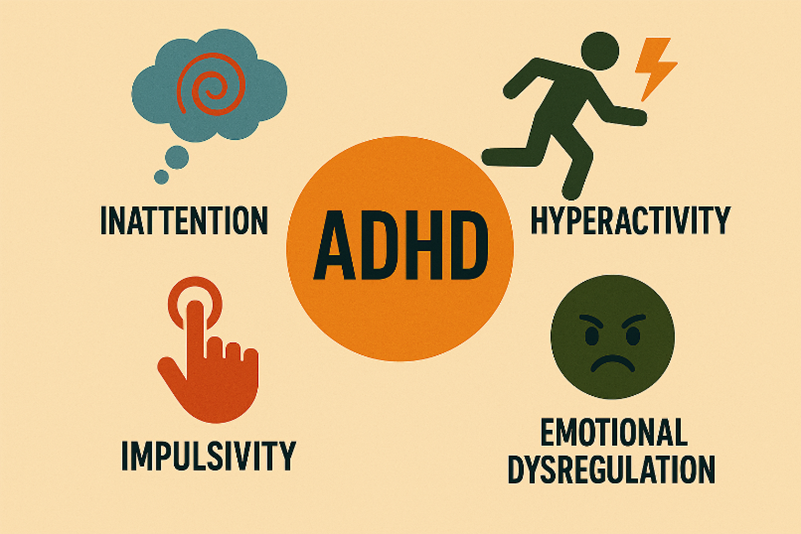
ADHD is “characterized by symptoms of inattention, hyperactivity, impulsivity, and emotional dysregulation that are excessive and pervasive, impairing in multiple contexts, and developmentally inappropriate.” Source: Wikipedia
This may seem a bit confusing. Everyone at times is subject to not paying attention, can’t sit still, and jumps into activities without much thought about the future. We all have our spurts of a disordered mind, then things get back to normal. It is part of being human. However, as far back as 1902, some doctors noticed there were young boys who could not seem to control their hyperactivity. It affected all aspects of their lives, not just a few items here and there, and the condition persisted over time. No amount of discipline or adult supervision could make the boys “behave”. They were always active to the point of disruption. It was as if they had no internal off switch. That is what everyone notices, even to this day, to the point of it becoming the stereotype of the ADHD sufferer.

Over time, psychologists have noticed that hidden behind all the activity were other abnormal behavioral patterns that did not seem to have an off switch. There were things like- not being able to pay attention, acting on impulse, always being disorganized, being blind to time, excessive daydreaming, absentmindedness, lack of control of emotions, and other mental aspects that were not under normal controls. It was also observed that there were those who had these types of symptoms who did not suffer from the out-of-control hyperactivity at all.
Today, those who are diagnosed with ADHD are placed into 3 subgroups.
Predominantly inattentive symptoms. (31% of cases)
They can’t pay attention and/or are easily distracted. This category is sometimes called Attention Deficit Disorder or ADD (No H).
Predominantly hyperactive, impulsive symptoms. (7% of cases)
This category is the stereotypical ADHD. It is comprised mostly of males (researchers don’t know why yet). You will also notice that in spite of the stereotype, such cases are in the minority.
Have a combination of both symptoms. (62%)
Females aren’t as likely to have hyperactive/impulsive symptoms. They have their own stereotype of being a daydreaming, bubbleheaded blond.
Within each category, there is also a spectrum of indications associated with ADHD. Presentation of symptoms is very individualistic. Some are very disruptive, while others are barely noticeable. For most, the signs appear in childhood and continue into their teens. There are rare cases where a brain trauma or toxic poisoning may have caused the symptoms of ADHD to appear. As those with ADHD grow into adulthood, some aspects of the condition may lessen as the mind matures or adaptive behaviors are gained. It may appear that they have grown out of their symptoms, but the condition remains.
Not all AHDH traits are disruptive. Positive traits can also be heightened by ADHD, like creativity, boldness in action, and noticing things others don’t. ADHD can turn these aspects into superpowers that can lead to much success. Other aspects remain disruptive though, and are the cause of much misery and depression. For example, difficulty focusing, failure to follow instructions, careless mistakes, losing items, interrupting, impatience, and overreacting emotionally. Despite all their efforts to have a normal life, they remain different from those around them, and before being diagnosed, they don’t know why.
Watch these two videos to get a better understanding of what it's like to have ADHD.
Just to make things even more complicated. Two-thirds of children have other disorders that hide the symptoms of ADHD. Like anxiety, depression, autism, and learning disabilities. Adults have higher percentages of divorces, have job difficulties, and have higher rates of substance abuse. There is an increased risk of suicide across all ages.
Why Does ADHD Happen - Pathophysiology
Medical science has not been able to determine the exact cause of ADHD yet. What the research does show is:
- It seems to be mostly inherited.
One out of four ADHD individuals has a parent with the same symptoms. The majority of the rest (74%) have other extended family members who show the signs of ADHD. Siblings of children diagnosed with ADHD are 3-4 times as likely to have the condition.
- The environment related to pregnancy and child development can have an impact. There is a greater prevalence of ADHD if:
- the mother smokes, drinks alcohol, takes drugs, or is exposed to other harmful chemicals.
- The child has a low birth weight or was born prematurely.
- The developing fetus or infant is exposed to infections like measles or experiences a traumatic brain injury.
- There is a dysfunction in the executive decision-making process of the brain. Mental abilities that help a person plan, organize, and manage their thoughts and actions to achieve their goals.
- A synaptic dysregulation of the neurotransmitters dopamine and norepinephrine seems to be involved.
- The presentation of symptoms is very individualistic between patients.
 Executive Function
To appreciate the pathology of ADHD, you first must understand what mental executive function is. Executive function is a collection of mental abilities that enable us to act appropriately. They enable us to organize our thoughts so that we can plan actions and work on achieving goals.
Executive function skills
|
Working memory |
Core skill |
The ability to hold and use information to follow instructions, solve problems, and make decisions. (related to short-term memory) |
|
Cognitive Flexibility |
Core skill |
The ability to switch between different tasks, adapt to change, and think creatively. |
|
Inhibitory control |
Core skill |
The ability to control acting on impulses. Related to thinking before acting and staying focused by ignoring distractions. |
|
Planning and Prioritizing |
Related skill |
Be able to figure out what steps are needed to complete a task and determine what is most important. |
|
Task initiation |
Related skill |
Starting a task without procrastinating or getting stuck at the beginning |
|
Time management |
Related skill |
Meeting deadlines, estimating how long a task will take, and being able to keep track of the flow of time. |
|
Problem Solving |
Related skill |
Analyzing a situation, finding solutions to problems, and the ability to consider other options |
|
Self-monitoring |
Related skill |
Being able to evaluate your own behavior and make adjustments as needed |
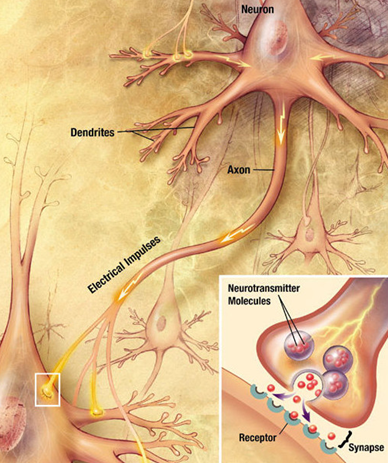 Neurotransmitter Synaptic Control
The ability to use our executive function is driven by the flow of neurotransmitter chemicals across the synaptic junctions between the brain neuron cells. Let me explain how this works.
At its simplest, each thought and action we have is the result of a combination of nerves firing or not firing. An electrical impulse will travel down a neuron ending in a part of the cell that contains bubbles of chemicals called neurotransmitters. The bubbles, called vesicles, are held close to the outer surface, adjacent to the junction with another nerve cell. The electric signal will make some of the bubbles pop, releasing the neurotransmitters. This changes the mix of chemicals held in the space between each nerve cell, called a synaptic junction. This results in either a buildup of electrical charge on the connecting nerve synapse or an inhibition of an electrical charge buildup. When an electrical charge threshold is passed, the nerve will “fire”, sending the electrical signal down the neural pathway.
The neurotransmitters are then sucked back into the nerve cell via channels and repackaged into vesicles. This rebalances the chemical mix back to normal. Thus, resetting the nerve's ability to send a signal. There are over 100 different neurotransmitter chemicals, with more being identified by researchers. Chemicals predominantly involved in executive function are dopamine and norepinephrine. That will be important later on when we talk about treatments for ADHD.
The Brain's Wiring in ADHD and Its Consequences
In ADHD, somewhere among the many steps in the flow of neurotransmitters that are involved with Executive Function, something or things were not formed normally at birth. The brain's wiring is messed up, and we do not know exactly where. It could even be in multiple steps at varying degrees of dysfunction. What we do know is that the ADHD behaviors are not under the conscious control of the patient. The ADHD suffer does not choose to behave abnormally; it just happens because their brain is wired differently.
The consequences of the rewiring of the brain from birth are;
- The ADHD child looks normal on the outside, but their miswired brain will not let them respond to the world in a normal fashion. This leads to aberrant behaviors
- If the abnormal behaviors cause problems, then those with authority over them will try to make the child conform to societal norms. However, the child will never be able to fully conform to societal expectations because the brain does not have the capacity to do so.
- When the problem behaviors continue despite corrective actions, then the child is punished. These patterns continue throughout the child's lifespan. If not given support, they can live a very challenging life.
- As a history of problem behaviors accumulates, the child is given negative labels and society tends to isolate or ignore them. They are passed over for promotions or fired from jobs. They experience troubled family lives and have a higher rate of divorce. They are given lower credit ratings and experience higher rates of bankruptcy.
- ADHD sufferers, if not given support, will develop a negative self-image and experience bouts of depression.
- An ADHD individual may develop coping skills that hide the symptom from being observed. They may also choose a lifestyle that minimizes the disruption they feel or have a spouse, parents, or others who do the compensating to minimize the disruption in the patient’s life. These can make it appear that the condition has lessened over time. It may appear that the patient just grew out of the problem. But the miswired brain remains. Eventually, or when conditions change, the old difficulties will be felt again.
- However, if the atypical behaviors give the child advantages (extra creativity, being able to hyper focus, always be active, etc), then with support, they can be very successful.
- If the problem is recognized and the patient is given the right therapy and support, then proper coping mechanisms can be developed, and the child can live a more normal life.
An important first step in learning to live with ADHD is to properly identify the disability by getting a proper diagnosis.
How is ADHD Diagnosed
Since medical science has not been able to isolate the problem causing ADHD, there is no way a doctor can give a screening test to discover it in their patients. Also, since the disability occurs on a microscopic level in the synapse, there are no imaging tests that can be utilized. However, tests may be used to eliminate other possible causes of the troubling behaviors. The main way a specialist gathers information to make a diagnosis is through questioning.
The doctor or psychiatrist has to obtain and evaluate a history of the patient's behaviors to determine a diagnosis of ADHD. Patient histories are usually obtained from multiple sources if available. Parents, teachers, school grade cards, and the like are often consulted. While evaluating the patient history, the clinician must also eliminate the possibility of other pathologies that can cause the behaviors that are being seen. In addition, the doctor or psychologist must also determine the degree of impact the symptoms have on the life of the patient. The question is not whether the symptom occurred; it is how often the problem is felt and how much the problem interferes with the patient being able to live a normal life.
The questionnaires used to obtain the needed medical history can be quite extensive, time-consuming, and involve the questioning of others who know the patient. They can take up to 1-3 hours. Additional visits may be needed.
“To make an ADHD diagnosis, providers look for these conditions:
For children, six or more symptoms in one of the two main categories (or both) over the last six months — inattention and hyperactivity/impulsivity.
For adults, at least five established ADHD behaviors in one category (inattention or hyperactivity/impulsivity) for six months.
Adults or children must have symptomatic behavior in two or more settings, like at home, school, or on the job, usually as identified by two or more observers.
The symptoms are debilitating and interfere with daily functioning.
Symptomatic behavior started in childhood, usually before age 12.
Symptoms aren’t due to another disorder. For example, the symptoms can’t be caused by anxiety or depression.”
Source: https://my.clevelandclinic.org/health/diagnostics/24758-adhd-screening
For a better understanding of the process, watch this video. I suggest that you pause the videos and have a close look at the lists presented.
Therapy for ADHD
In considering the therapy for ADHD, it is important to remember that the outward symptoms of the disability are not under voluntary control. There is no way to make the patient act in normal patterns. However, there are compensation therapies available that may enable the patient to lead a normal life. They may even facilitate the advantageous aspects of the condition so that the patient can achieve greater success in their endeavors. Once predominant symptoms are identified, therapy can be tailored to be even more effective. The goals of therapy are the management of symptoms, which is done primarily through counseling and medications.
Counseling
In counseling for ADHD, clinicians use a multifaceted approach that includes gaining coping skills, behavioral reinforcement and emotional regulation. Techniques often include psychoeducation, goal setting, skill practice and implementing techniques like Cognitive Behavioral Therapy. For children, counseling often includes training the parents to help create structured environments and teach positive discipline.
Counseling sessions often include:
- The therapists asking questions to understand how ADHD affects the individual and help set personal goals.
- Talking through problems and identifying solutions.
- Skill-building activities.
- Selecting appropriate lifestyle choices, including career selections
- Tracking progress and adjustment of strategies as needed.
- Homework assignments are often given to practice skills outside of sessions, which helps reinforce learning.
- Training parents, spouses, and significant others in supporting skills.
Drugs
Medications that affect the dopamine pathway and or the norepinephrine pathway are effective in ADHD therapy. They boost the neurotransmitter concentration levels in the synapse, enabling proper functioning of the neural pathway.
Medication used in ADHD therapy
|
Drug Class |
Names |
ADHD Action |
|
Stimulants Amphetamines |
Adderall, Mydayis, Dexedrine, Vyvanse |
Increase dopamine and norepinephrine concentrations in the brain's synapses |
|
Stimulants Methylphenidate |
Ritalin, Concerta, Metadate, Daytrana, Quillivant XR. |
Blocks the reuptake of dopamine and norepinephrine |
|
Antidepressants |
Strattera (amoxatine) |
Increases norepinephrine levels |
|
Wellbutrin (bupropion) |
norepinephrine-dopamine reuptake inhibitor |
|
|
Alpha Agonists |
Guanfacine, Clonidine |
Stimulates Alpha-2 adrenergic receptors in the brain leading to improved attention and reduced hyperactivity |
 Medication Management Concerns
In ADHD, just as symptom presentation is varied and individualistic, so also is the drug therapy. A medication is selected, then monitored for effect and side effect tolerance. The dosage has to be started low, then dialed in for optimum effect. If the drug does not have the desired effect (or more likely, has side effect concerns), then the process starts over with a new medication. Monitoring for effect will be key and is primarily done by the patient and caregivers. Even with the best of management, 20% of patients do not respond well to drug therapy.
Because of the abuse potential of stimulants, extra precautions need to be taken for safety reasons. For example, you can only get a 30-day prescription with no refills. Also, medications given at school may have to be supervised by school personnel. There may be others who will want to obtain the medication as an academic performance enhancer or for recreational use. Given in unsupervised larger doses, they may become addictive.
Along with the addiction potential, there have been many other concerns over the long-term use of the medications used in ADHD. Fortunately, many long-term studies have shown that taken as directed, the medication has proven safer to use than aspirin. The need for medication may lessen as the brain matures, effective coping mechanisms are obtained, or lifestyle circumstances change.

Why should In-home caregivers even care about those with Attention Deficit Hyperactivity Disorder?
The ability to evaluate ourselves is an executive function of the brain. Therefore, it may be difficult for the ADHD patient to see things as they really are or judge the severity of ADHD symptoms or medication side effects. Caregivers, family members, and other support personnel (for example, teachers) may need to identify the symptoms of ADHD and monitor therapy. In addition, if there is a suspicion of ADHD, others may be needed to help the patient work through the diagnosis process. For example, showing up on time to doctor appointments and/or filling out the questionnaires.
Because of the involuntary nature of the condition and because it is an incurable condition, caregivers may also be needed to give long-term (even lifetime) lifestyle support, provide structure, give reminders, comfort when things go wrong, and give understanding and resolution when ADHD symptoms impact others negatively.
If you have a resident who is diagnosed with ADHD, your caring support and stable home structure are greatly needed. If you suspect troubling behaviors are something more, then your efforts are required to help navigate the diagnosis process and initiation of therapy. I hope this CE has helped break the stereotype and given you a more helpful view of AHDH.
As always, Good Luck in your caregiving efforts.
Mark Parkinson BsPharm
Reference:
- Ami Ishver, PharmD. Amphetamine/Dextroamphetamine (Adderall, Mydayis, and others) - Uses, Side Effects, and More. com. Feb 16, 2025. https://www.webmd.com/drugs/2/drug-63163/adderall-oral/details#uses
- Drugs.com. 2025. https://www.drugs.com/adderall.html
- Attention deficit hyperactivity disorder. Wikipedia, the free encyclopedia. Dec 11, 2025. https://en.wikipedia.org/wiki/Attention_deficit_hyperactivity_disorder
- Attentiondeficit hyperactivity disorder controversies. Wikipedia, the free encyclopedia. Nov 4, 2025. https://en.wikipedia.org/wiki/Attention_deficit_hyperactivity_disorder_controversies
- Thomas H Brown Ph.D. ADD/ADHD | What Is Attention Deficit Hyperactivity Disorder?. 2016 https://www.youtube.com/watch?v=ouZrZa5pLXk
- What is ADHD? American Psychiatric Association. Oct 2025. https://www.psychiatry.org/patients-families/adhd/what-is-adhd
- Understanding Attention Deficit Hyperactivity Disorder (ADHD). Rhesus Medicine. 2022. https://www.youtube.com/watch?v=-merjqmlYo8
Exam Portal
click on [Take Exam]
Purchase membership here to unlock Exam Portal.
|
|
|
|
|
*Important*
Registration and login is required to place your name on your CE Certificates and access your certificate history.
Username MUST be how you want your name on your CE Certificate.