
Food Handlers and Food Poisoning in Foster Care
Food Handlers and Food Poisoning in Foster Care
Author: Mark Parkinson BsPharm: President AFC-CE
Credit Hours 1 - Approximate time required: 60 min.
Educational Goal:
Provide food handler training for Foster care homes.
Educational Objectives:
- Educate In-home caregivers about food poisoning.
- Tell how to control the conditions that lead to food poisoning.
- Define Cross Contamination
Procedure:
Read the course materials. 2. Click on exam portal [Take Exam]. 3. If you have not done so yet fill in Register form (username must be the name you want on your CE certificate). 4. Log in 5. Take exam. 6. Click on [Show Results] when done and follow the instructions that appear. 7. A score of 70% or better is considered passing and a Certificate of Completion will be generated for your records.
Disclaimer
The information presented in this activity is not meant contraindications may be of concern. All applicable manufacturers’ product information should be reviewed before use. The author and publisher of this continuing education program have made all reasonable efforts to ensure that all information contained herein is accurate in accordance with the latest available scientific knowledge at the time of acceptance for publication. Nutritional products discussed are not intended for the diagnosis, treatment, cure, or prevention of any disease.to serve as a guideline for patient management. All procedures, medications, or other courses of diagnosis or treatment discussed or suggested in this article should not be used by care providers without evaluation of their patients’ Doctor. Some conditions and possible
Food Handlers and Food Poisoning in Foster Care
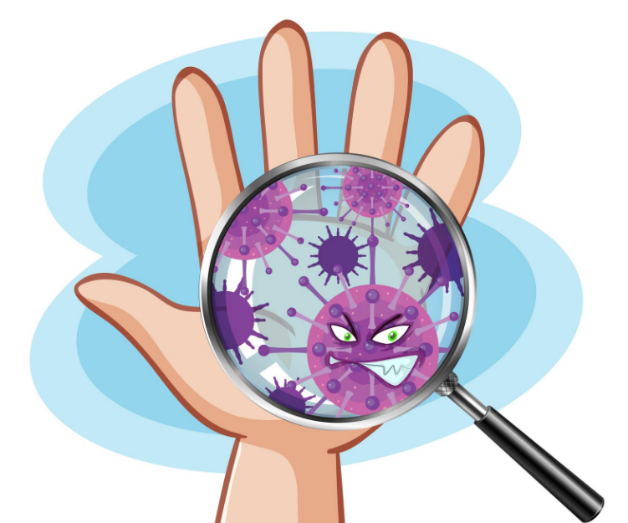 The Problem- Food Poisoning
Your residents are under attack
Your residents are constantly being assaulted by an evil army of noxious little critters that want to invade their bodies, start to multiply, and eat them from the inside out. The medical term for them is pathogens. Normally, a healthy body can defend itself against this evil army. Unfortunately, there are members of that evil army (a whole host of bacteria, viruses, parasites, and fungi) that have figured out how to get past our defenses by hitching a ride on the food we eat. Once they are inside us, they can cause all sorts of problems. There are more than 250 food-borne illnesses that we can be afflicted with. Collectively, we tend to call them all food poisoning. Fortunately, adult foster care providers can stop these invaders cold by following a few simple rules in food preparation.
But first--------
What does food poisoning look like?
 According to the CDC, “The most common symptoms of food poisoning include diarrhea, stomach pain or cramps, nausea, vomiting, and fever. Signs of severe food poisoning include bloody diarrhea, diarrhea that lasts more than 3 days, fever over 102°F, vomiting so often that you cannot keep liquids down, and signs of dehydration.”
The CDC also states
“See a doctor if you have any symptoms that are severe, including:
-
-
-
-
- Bloody diarrhea
- Diarrhea that lasts more than 3 days
- High fever (temperature over 102°F)
- Vomiting so often that you cannot keep liquids down
- Signs of dehydration, which include not urinating (peeing) much, a dry mouth and throat, and/or feeling dizzy when standing up.”
-
-
-
Complications of food poisoning
Again from the CDC
“Most people have mild illnesses, but some infections spread by contaminated food are serious and even life-threatening. Some people may need to be hospitalized, and some illnesses lead to other health problems, including:
- Meningitis
- Kidney damage
- Hemolytic uremic syndrome (HUS), which can cause kidney failure
- Arthritis
- Brain and nerve damage
 For some people, these health problems can last for weeks or months after recovering from a foodborne illness. For others, they never go away.”
Where does food poisoning come from?
This is probably the most important part of this whole CE. Food poisoning can come from anywhere. Not only from restaurants and food vendors, but also from grocery stores’ produce section and meat markets. Even from the cleanest of home kitchens. You must assume those nasty little critters are everywhere. If you think about it too much, you can turn yourself into a germaphobe
Higher Standards
A lot of food poisoning cases are mild, and symptoms go away by themselves. Our body has some pretty good defenses in place. Even if a few of the enemy army manage to get inside us, they are usually killed off quickly by a healthy body's antimicrobial resistance. But we are not taking care of healthy bodies, are we? Your residents’ immune systems are compromised. That is why Adult Foster Care health professionals are held to higher standards of food preparation and storage than the average home. Your residents need your vigilance to remain well and be infection-free. Count on county licensors inspecting your kitchen and food storage areas and asking pointed questions about your food handling techniques. It’s just part of the job.
A few final points about where food poisoning comes from
All food-borne microbes will end up in your stomach acid, and that will be the end of most of them. But there are a few of those nasty critters that can survive the acid bath, and you need to know about them. Some of the names you will readily recognize.
Final quote from the CDC
“Some germs can make you sick within a few hours after you swallow them. Others may take a few days to make you sick. This table provides details about the symptoms caused by different germs, when they usually start, and common sources for those germs. Search the table for symptoms you are having.
|
Germ |
Symptoms and When They Start |
Common Sources |
|
Staphylococcus aureus (Staph food poisoning) |
Nausea, vomiting, stomach cramps, diarrhea 30 minutes to 8 hours |
Foods that are not cooked after handling, such as sliced meats, puddings, pastries, and sandwiches |
|
Vibrio |
Watery diarrhea, nausea, stomach cramps, vomiting, fever, chills Within 24 hours |
Raw or undercooked shellfish, particularly oysters |
|
Clostridium perfringens |
Diarrhea, stomach cramps that last for less than 24 hours 6 to 24 hours |
Meat, poultry, gravies, and other foods cooked in large batches and held at an unsafe temperature |
|
Salmonella |
Diarrhea (can be bloody), fever, stomach cramps, vomiting 6 hours to 6 days |
Raw or undercooked chicken, turkey, and other meats; eggs; unpasteurized (raw) milk and juice; raw fruits and vegetables; many animals, including backyard poultry, reptiles and amphibians, and small mammals |
|
Norovirus |
Diarrhea, vomiting, nausea, stomach pain 12 to 48 hours |
Leafy greens, fresh fruits, shellfish (such as raw oysters), contaminated water, infected people, touching surfaces that have the virus on them |
|
Clostridium botulinum (Botulism) |
Difficulty swallowing, muscle weakness, double or blurred vision, drooping eyelids, slurred speech, and difficulty moving eyes 18 to 36 hours |
Improperly canned or fermented foods, homemade alcohol (pruno) |
|
Campylobacter |
Diarrhea (often bloody), fever, stomach cramps 2 to 5 days |
Raw or undercooked poultry, raw (unpasteurized) milk, contaminated water, pets (including cats and dogs) |
|
E. coli (Escherichia coli) |
Severe stomach cramps, diarrhea (often bloody), vomiting Long-term effects: Around 5–10% of people diagnosed with E. coli develop a life-threatening health problem called hemolytic uremic syndrome 3 to 4 days |
Raw or undercooked ground beef, raw (unpasteurized) milk and juice, raw vegetables (such as lettuce), raw sprouts, and contaminated water |
|
Cyclospora |
Watery diarrhea, loss of appetite, weight loss, stomach cramps, bloating, increased gas, nausea, fatigue 1 week |
Raw fruits or vegetables and herbs |
|
Listeria (invasive illness) |
Fever and flu-like symptoms (such as muscle aches and fatigue), headache, stiff neck, confusion, loss of balance, and seizures Pregnant women: Infections during pregnancy can lead to miscarriage, stillbirth, premature delivery, or life-threatening infection of the newborn. Call the doctor right away if you have a fever and feel more tired and achy than usual. 2 weeks |
Queso fresco and other soft cheeses, raw sprouts, melons, hot dogs, pâtés, deli meats, smoked fish, and raw (unpasteurized) milk |
The Solution- Fighting to gain control
First line of defense
You, the food handlers, are the first line of defense against food poisoning. You and your residents won’t get sick if you are never exposed to sufficient enough quantities of germs to make you sick. That is the second most important concept of this lesson. In a homestyle kitchen, you can never eliminate germs, but you can greatly limit the amount of those nasty critters you are exposed to. That is the goal of food handler regulations of the state. Most are based on common sense techniques designed to control the growth and or exposure to food poisoning-causing microbes. If you find them inconvenient or annoying, remember that higher standards thing we talked about earlier. It’s just part of being a health care professional.
Let’s put this in a framework you are familiar with. You are accustomed to the concept of universal precautions to prevent patient and caregiver exposure to potentially harmful substances. Take those basic techniques and apply them to protecting foodstuffs. You are never 100% sure if the food you are handling is contaminated or if what you are doing will contaminate the food. You just assume that what you are doing is hazardous and take precautionary steps for protection.
Protecting the food from you
Let’s face it. You and the actions you take are THE major determinants of contaminated food. You have to control the environment where the food is and use good personal hygiene habits.
- You and the Kitchen
The kitchen, you, and the clothes you wear must be regularly cleaned. You must control your hair when cooking. Trim your nails or wear gloves if you want to have long fingernails. Be aware that jewelry and watches are where germs can hide. Aprons, oven mitts, hot pads, dishrags, and sponges must also be regularly cleaned or replaced. Disposable gloves are your friend. Their use easily solves many potential problems. Bandages must be covered with disposable gloves. But gloves can also get contaminated. (see the upcoming video) When in doubt, get on a new pair. Don’t forget to clean food storage areas on a regular basis, that includes the fridge and freezer.
- Hand washing
When you touch any contaminated area, wash your hands before touching food. Duh, right. We already know that. Just as a reminder, wash hands:
-
- Before working with food
- Putting on gloves
- After handling raw meats
- Handling garbage or after cleaning up spills
Here is a quick, entertaining video reminder of why hand washing is important.
- Pets and Pests
No pets in food prep areas. Especially birds above food and cats on counters. If you see a rodent or insect, take action quickly. The one you see represents multiple ones you can’t see. A good mouse killer is a cornmeal, sugar, and baking soda combination. The cornmeal and sugar draw them in; the baking soda kills them. Mice can’t burp or fart. The gas just builds up and kills the pest.
- Garbage
Garbage cans in kitchens having lids and liners are a good idea.
- Sickness
Caregiver sickness is a challenge for AFC homes. The worker can’t go home; they are at home. But you can get someone else to cook or order out. If you have to cook because there is no one else, use the universal precaution methods. Glove up and mask up. Cough and sneeze into a tissue, paper towel, or elbow. Wash more frequently. Clean and sanitize handled items.
- Clean vs Sanitized
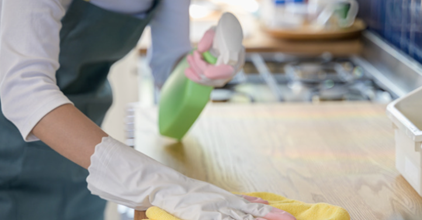
Cleaning and sanitizing are not the same thing. Cleaning is the removal of grease, oils, and debris. Sanitizing is reducing the number of germs to safe levels. You cannot count on washing and scrubbing to kill off all the germs. You have to take additional steps to sanitize the food prep area.
You must apply a disinfecting or sanitizing chemical to kitchen surfaces. Then allow it to sit on surfaces long enough to be effective. There are several choices for kitchen sanitizers. The old standby is 1 tablespoon of bleach in a gallon of water. Leave on surfaces or soak items needing to be sanitized for at least 10 seconds.
Protecting you from the germs in food
Most, if not all the food you buy is clean but not sanitized. Under the right conditions, the germs in and on your food will multiply until they reach the numbers that can make you sick. The food handling goal is to kill them off and or keep them from multiplying to dangerous levels. Your main tools to accomplish this goal are controlling exposure to germ sources and the temperature of the food.
 Temperature
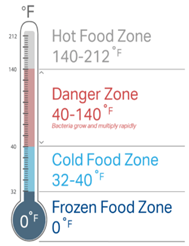
Temperature has a direct effect on any microbe living on or in the foods we eat, especially perishable foods. Cold and freezing temperatures below 41°F reduce the metabolism of organisms, thus inhibiting their growth and reproduction. High heat (above 165°F) will outright kill the germs. Between 41°F and 165°F is called the Danger Zone, where bacteria thrive and multiply. The longer your food stays in the danger zone, the more unsafe it will be to consume.
Now you know why adult foster care homes have to have a thermometer in the refrigerator. The proper place for it is in the warmest part of the fridge, which is the front. That ensures that the rest of the fridge is below 41°F and out of the danger zone.
Freezing does not sanitize your food. When the food thaws and the temperature enters the danger zone, the microorganisms will wake up and start to grow again. The proper food handling principle is to reduce the amount of time perishable foods stay in the danger zone to the shortest time possible. The safest way to thaw food is in the refrigerator or in the microwave.
The same principle applies to the other end of the danger zone. Temperature probes inserted into the perishable food showing temperatures above 165°F ensure that the germs have been killed off. But that is not the end of the food poisoning concerns. Some germs produce chemicals that are toxic to humans. For example, the bacteria Clostridium botulinum secrete the botulism toxin, which heat will not destroy. Thus, it is still possible to get food poisoning from properly cooked foods if that food has stayed too long in the danger zone. So you still have to be concerned with how much time the perishable food remains between 41°F and 165°F.
There is no way for you to visually determine if food has become dangerous from being held too long in the danger zone. It is recommended for safety reasons that “Foods left in the Danger Zone for more than four hours must be discarded.” (Oregon Food Safety Your Self-Training Manual)
Cross Contamination
If food that is ready to eat is exposed to a germ source, it is possible that those germs will grow and cause food poisoning, even if the food has already been cooked. This is called cross-contamination.
Watch this video
Other common cross-contamination sources are;
- Placing soiled aprons on food prep surfaces
- Placing cooked meats back on the unwashed plate where the raw meat came from
- Using a non-sanitized probe thermometer is like injecting germs into food with a dirty needle.
- Loose jewelry or hair falling into food.
- Reusing utensils or fingers to sample cooked food.
Preventing cross-contamination is not difficult if you are aware of all the potential germ sources around you while handling food.
Proper Food Storage
The final item to cover is how to safely store foodstuffs. Remember, you are trying to protect your food from potential germ sources, toxic chemicals, and danger zone temperatures.
- Store foods on shelves 6 inches off the floor.
- Raw animal products should be stored away from or below ready-to-eat foods.
- Rotate stores, throw away spoiled foods, and pay attention to expiration dates.
- Store bulk foods in containers with lids and labels.
Conclusion
We are surrounded by and are constantly under attack from an army of microbes that can cause us harm. The foods we eat are a potential weak point in our defenses. You, the professional care provider, are the first line of defense against these food-borne pathogens that can cause incidences of food poisoning.

Food handlers must have good hygiene habits and practice thorough hand washing techniques. Cleaning and sanitizing is a two-step process to protect you and the food from contamination. You need to assume that germs are everywhere and take precautions against potential cross-contamination. You must keep perishable foods out of the danger zone temperatures as much as possible. Foodstuffs have to be properly stored or disposed of in order to prevent foodborne illness.
As always, good luck in your caregiving and this time, food handling efforts.
Mark Parkins BsPharm
References:
- Food Safety: Your Self-Training Manual. Oregon Health Authority. 2025. Food Safety: Your Self-Training Manual. Oregon Health Authority Foodborne Illness Prevention Program. #34-83 English(Rev 07/12)
- Food Handler Safety Training full length video. Southern Nevada Health District. 2024. https://www.youtube.com/watch?v=71bKF2lE37E&t=926s
- Food Safety Food Handler Training Video. June Owens Creative. 2014. https://www.youtube.com/watch?v=9Y3IPtayGys
- Food Handling Safety Training from SafetyVideos.com, Safety Videos.com .2020. https://www.youtube.com/watch?v=n7jWt7IF3QY
- Symptoms of Food Poisoning. U.S. Centers for Disease Control and Prevention, Food Safety.2025. https://www.cdc.gov/food-safety/signs-symptoms/index.html#:~:text=The%20most%20common%20symptoms%20of,down%2C%20and%20signs%20of%20dehydration.
Exam Portal
click on [Take Exam]
Purchase membership here to unlock Exam Portal.
|
|
|
|
|
*Important*
Registration and login is required to place your name on your CE Certificates and access your certificate history.
Username MUST be how you want your name on your CE Certificate.